Four phases, one producer, no surprises.
Every engagement follows the same disciplined sequence — discovery, design, production, execution. You always know what stage we are in, what is due next and who owns it.

How an engagement actually runs.
Every engagement is staffed by one senior producer supported by a production manager and a logistics lead. That core team stays with you through the entire engagement.
Discovery
A 45-minute working session with the sponsor of the event. We map objectives, headcount, budget band, timing, non-negotiables and any history the team is bringing into the program. Nothing gets booked in this phase.
By the end of discovery you have a written brief, a recommended approach and a rough budget band. If we are not the right fit, we will tell you at this stage.
- Written discovery brief
- Recommended program approach
- Budget band and headcount confirmation
- Timeline and go/no-go decision point
Design
The largest phase in most engagements. We source venues, contract primary vendors, draft the run-of-show and build a line-item budget you can take to finance without edits. Every cost is shown separately from our fee.
You see the same numbers we do. Venue options come with a written comparison. The budget is issued before any commitment is signed.
- Venue shortlist with site visit support
- Draft run-of-show document
- Line-item budget in writing
- Vendor recommendations and quotes
- Full contract review and negotiation
Production
Vendors are contracted, logistics are scheduled, staffing is sized and rehearsals are booked. This is the phase where most external dependencies get locked and where the run-of-show becomes final.
You receive weekly written updates during production. Anything that could affect the event is flagged in writing at the moment we identify it, not at the next status call.
- Executed vendor contracts
- Final run-of-show and rehearsal schedule
- Staffing plan and on-site team roster
- Risk and contingency plan
- Weekly written status updates
Execution
On-site management from load-in to load-out. A Meridian producer is physically on site for any event over 100 guests, plus a staffing team sized to your headcount. You get a single point of contact and a live status channel during the day.
After the event, a written post-event report lands within ten business days with attendance, actual spend versus budget and attendee feedback data.
- Full on-site production management
- Guest services and check-in support
- Vendor coordination on the day
- Load-out and venue reconciliation
- Post-event report within 10 business days
The core team assigned to every engagement.
Each engagement is staffed with four primary roles. For larger programs, this core is expanded with additional production and logistics support.
Senior Producer
Day-one contactOwns the entire program from first call to load-out. Your single accountable point of contact, and the person physically on site during the event.
Production Manager
Builds and runs the showOwns the run-of-show, vendor coordination, rehearsal and on-site production execution. Reports to the senior producer.
Logistics Lead
Handles the moving partsOwns transportation, staffing, load-in schedules, guest movement and on-site logistics. The reason run-of-shows rarely slip.
Creative Lead
Owns the visual identityOwns design, décor, staging, signage and the visual arc of the event. Assigned to engagements where visual production is in scope.
How we keep everything visible to you.
You get access to the same working documents we use internally. No black boxes, no requests for status you cannot see yourself.
Live Budget Tracker
A shared spreadsheet showing every line item, vendor quote, actual invoice and remaining contingency, updated weekly.
Run-of-Show Document
The minute-by-minute timing document, visible to all stakeholders, with named owners for each segment.
Vendor Contact Sheet
Every vendor, contact name, phone number and role in the event, updated as contracts are executed.
Risk Register
A written log of risks identified during planning, with mitigation and contingency for each one.
Weekly Status Updates
A short written update every Friday during production, with decisions required, deadlines and blockers.
On-Site Status Channel
A live communication channel open during the event, so stakeholders can reach the producer without interrupting on-site work.
What a six-month engagement looks like.
This is the sequence for a typical 400-guest corporate program in a major U.S. market. Larger programs stretch to twelve months. Smaller programs compress to ten weeks.
Scoping call and written brief
45-minute working session with the sponsor. Written brief issued within three business days with a recommended approach and a rough budget band.
Venue search and site visits
Shortlist of five to seven venues prepared. Site visits scheduled for the strongest options. Written comparison issued after visits.
Venue contracted, first vendor quotes
Venue contract executed. Catering, AV and entertainment quotes collected and shown side by side with our recommendation.
Line-item budget issued
Full budget with vendor costs, our fee and contingency shown separately. Run-of-show first draft issued at the same time.
Vendors contracted, invitations out
All primary vendors contracted. Invitations issued, RSVP tracking begins. Weekly status updates start.
Logistics and staffing locked
Guest count confirmed. Staffing sized and briefed. Transport routes planned. Rehearsals scheduled.
Final walkthrough and rehearsals
On-site walkthrough with the venue and primary vendors. Run-of-show finalized. Full rehearsal with presenters where applicable.
Event day and load-out
Full on-site management from load-in to load-out. Live status channel open to stakeholders throughout the day.
Post-event report
Attendance, actual spend versus budget, vendor debrief and attendee feedback delivered within ten business days.
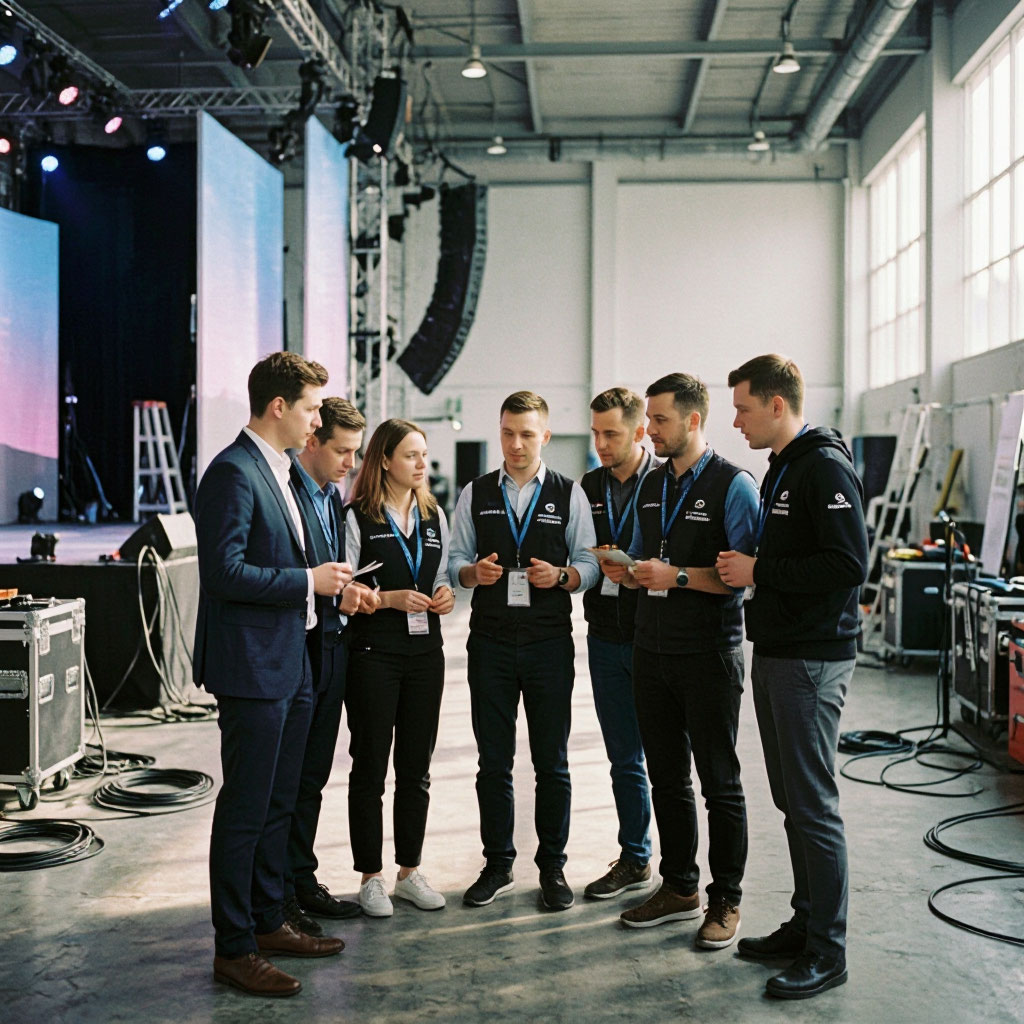 Written reporting on every phase
Three commitments we make on every engagement.
These are not aspirational. They are contractual commitments that shape how we staff, quote and deliver every program.
-
1
You always know the numberBudgets are line-itemed and updated weekly. No cost appears on an invoice that was not quoted in writing first.
-
2
You always know the stageEvery phase has defined deliverables and a defined exit point. You can see exactly what stage we are in and what is due next.
-
3
One senior producer, start to finishThe person who takes your first call is the person standing in the room on event day. No handoffs to junior coordinators.
-
4
Written reporting at every stageDiscovery brief, budget, run-of-show, risk register and post-event report — all delivered in writing and stored in your shared folder.
-
5
Escalation in writingAnything that could affect the event is flagged in writing the moment we identify it, with two or more options for how to handle it.
-
6
Vendor invoices at costVendor pricing is passed through at cost and shown separately from our fee. No hidden margin inside supplier quotes.
The three things clients tell us they value most.
Predictability
Events fail in the last two weeks, not the first two. Our process is built to remove those failure points early, so the final stretch is execution, not firefighting.
Accountability
One producer owns the outcome. There is no confusion about who to call when something needs a decision, and no relay through account managers.
Transparency
You see the same numbers, documents and risk register we use internally. Every cost is shown separately from our fee, every week, in writing.
Answers to the questions we get most.
If you do not see your question here, the full FAQ page covers contracts, payment terms and how we work with internal teams.
Yes. If you already have a venue, caterer or run-of-show, that phase is shortened or removed entirely. The budget reflects the narrower scope.
Your senior producer is your day-to-day contact. They run status calls, send weekly updates and manage the vendor team directly.
We maintain standby relationships in every market we serve, plus a documented contingency plan for each vendor category. Any issue is escalated to the producer immediately, and mitigation options are activated on the spot.
Every change is quoted in writing before proceeding. You approve or decline, and the budget is updated the same week. No surprise line items on the final invoice.
Start at phase one.
Discovery is a 45-minute call with no commitment. Give us the brief and we will send a written approach within three business days.
Start with a 45-minute planning call.
Tell us about the event and we will come back within one business day with availability, a rough budget range and next steps.
- One senior producer assigned from day one
- Written brief within three business days
- Line-item budget before any commitment
- Post-event report within ten business days